
How to Clean Car Mats Properly — Rubber and Fabric
- by Tod Howard
-
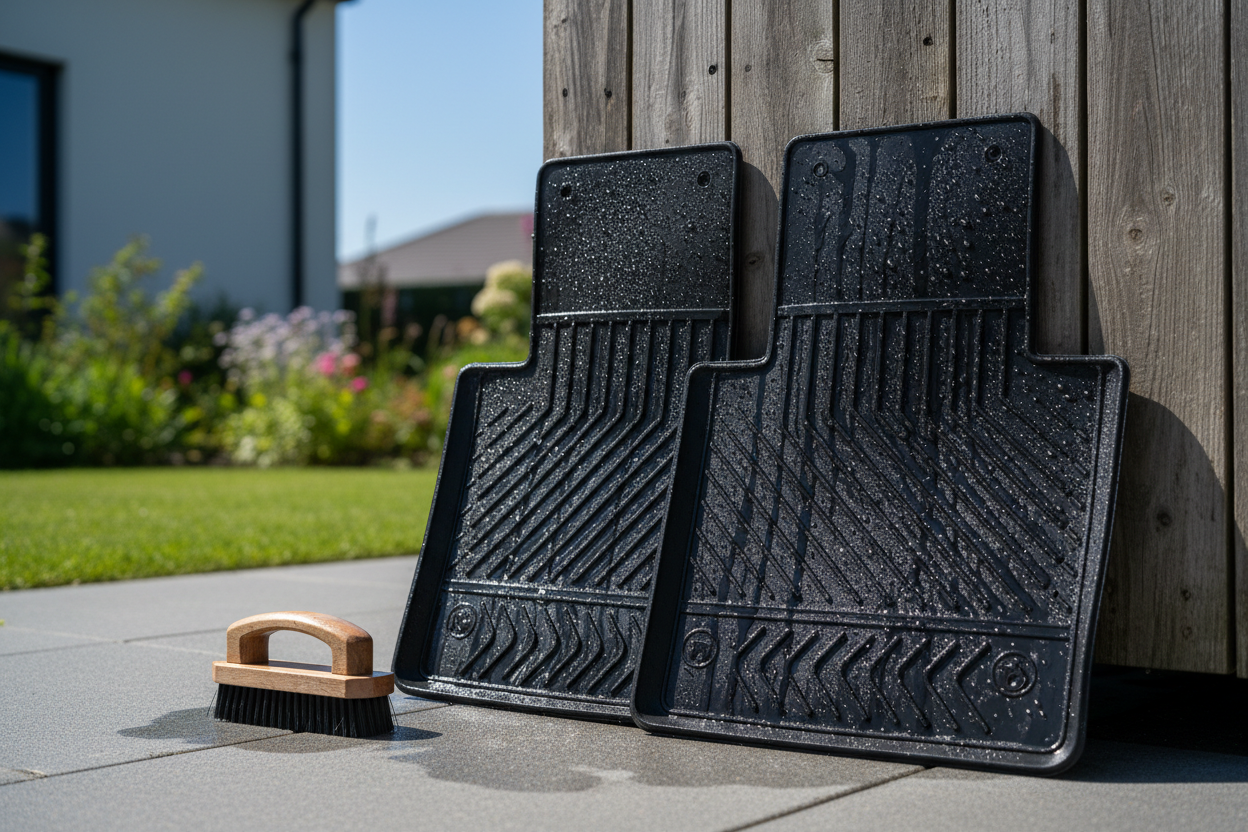
Car mats take more punishment than almost any other part of your interior. Mud, rain, food crumbs, pet hair, road salt, spilled drinks — it all ends up on the mats. And because they sit on the floor, they're easy to ignore until they start to smell or look genuinely grim. A proper clean takes less than 30 minutes and makes the whole interior feel fresher.
First: Always Remove the Mats from the Car
Don't try to clean mats in situ. Remove them fully so you can shake out loose dirt, clean both sides, and allow them to dry completely before putting them back. A damp mat returned to the car is a fast track to mildew smell.
Cleaning Rubber or PVC Car Mats
Rubber mats are the easiest to clean and the most durable — they can take a proper hosing down without any risk of damage.
- Shake and knock out loose dirt. Bang them against a wall or concrete to dislodge embedded grit from the grooves.
- Rinse with a hose or pressure washer. A jet of water gets into the ridges and channels that a brush can't reach. Work from the top down.
- Scrub with an all-purpose cleaner and a stiff brush. Pay particular attention to the anti-slip ridges on the underside and the deep channels on the top surface where mud collects.
- Rinse thoroughly. Make sure no soap residue remains — it can make rubber surfaces slippery.
- Dry in the sun or with a leaf blower. Stand them upright to allow both sides to drain and air dry fully before replacing. A wet rubber mat can cause the mat to slide under the pedals — a genuine safety issue.
Optional finishing step: Once dry, apply 303 Automotive Stain Guard to repel future dirt and make the next clean even easier. It creates an invisible barrier that prevents mud and grime bonding to the surface.
Cleaning Fabric or Carpet Car Mats
Fabric mats need a little more care but respond very well to a thorough clean.
- Shake out loose dirt. Take them outside and give them a firm shake, then bang against a hard surface.
- Vacuum thoroughly. Use an upholstery attachment and work in overlapping strokes. Get into the edges and corners where grit accumulates.
- Pre-treat stains. For mud, food, or drink stains, apply an upholstery cleaner and work it in with a soft brush. Allow to dwell for a few minutes before agitating further.
- Scrub the whole mat. Mix a small amount of carpet shampoo with warm water and work it into the fibres with a stiff brush, scrubbing in multiple directions to lift embedded dirt.
- Extract or rinse. If you have a wet/dry vacuum or carpet extractor, use it to pull out the dirty water. Otherwise, rinse with a hose on a gentle setting and squeeze out as much water as possible by pressing (not wringing).
- Dry completely before reinstalling. This is critical. Hang fabric mats over a fence or washing line in direct sunlight if possible. Allow at least 2–3 hours — longer in damp weather. A damp fabric mat will smell within 24 hours.
Protect against future stains: Once dry, apply 303 Automotive Stain Guard to fabric mats. It penetrates the fibres and makes liquid bead up rather than soak in — giving you time to blot spills before they stain.
How Often Should You Clean Car Mats?
- Quick shake/vacuum: Every wash — it takes 2 minutes and prevents build-up
- Full clean: Every 4–6 weeks for regular use, or after muddy or wet weather
- Deep clean: Two or three times a year, or whenever they start to hold odour
A Note on Drying
The most common mistake is putting mats back while still damp. Even slightly damp mats create a humid environment under the footwell that breeds mould and produces that musty smell that's very hard to shift. When in doubt, leave them another hour.
Want to make future cleans easier? Pick up 303 Automotive Stain Guard — treat your mats once after cleaning and they'll resist dirt and spills far more effectively going forward.


Please upload banner from store admin blog pages